
Augusta GA Real Estate Market Update: Where Are Buyers Making Moves?If you are thinking about buying or selling a home in the Augusta area, one of the most useful questions to ask is not simply

Dated: September 15 2026
Views: 2
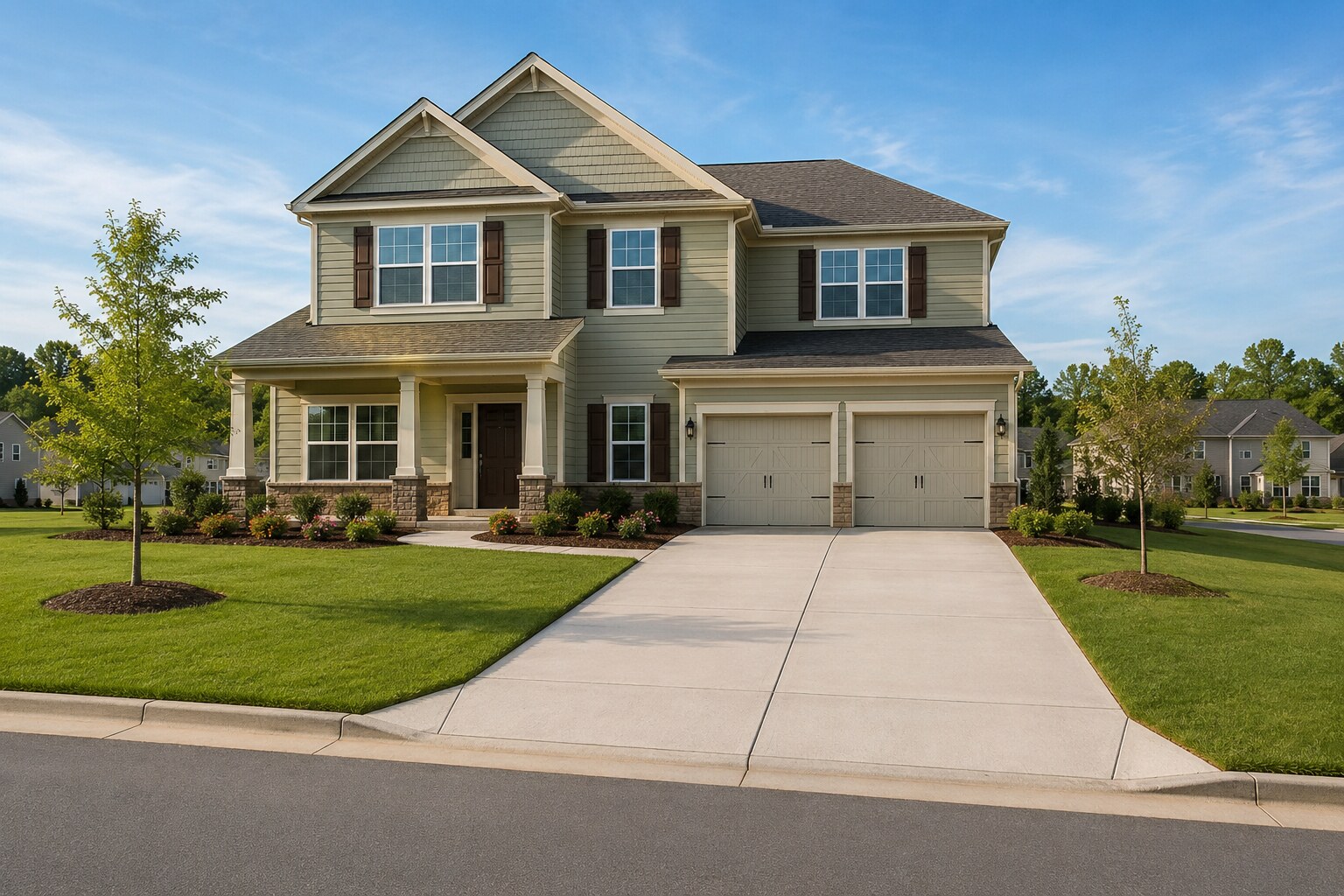
If you are preparing to sell a resale home in Augusta Richmond County, Columbia County, or North Augusta, you may be competing with more than the home down the street. You may also be competing with new homes offering below market interest rates, temporary or permanent rate buydowns, closing cost assistance, upgrades, and other incentives.
That can feel discouraging, especially if you need a certain sales price or net proceeds to pay off your mortgage and complete your next move.
Here is the direct answer: Your resale home does not have to offer everything a builder offers, but its price, condition, included features, and financial terms must give buyers a clear reason to choose it.
The right strategy starts by understanding what buyers are actually comparing.
Most sellers begin with two important numbers:
Buyers do not see the decision from that perspective. They usually compare the total package:
A $340,000 resale home may look less attractive beside a similarly priced new home if the builder is offering substantial closing cost assistance or a special interest rate. On the other hand, the resale home may offer a larger lot, mature landscaping, fencing, blinds, appliances, a storage building, and a floor plan that the builder does not currently have available.
The seller's job is not to imitate the builder. It is to make the resale home's complete value clear.

In the current Augusta area market, many resale homes priced from approximately $300,000 to $350,000 may compete directly with new construction inventory.
Buyers in this range may be especially sensitive to the monthly payment and the cash required at closing. A builder's advertised rate or closing cost credit can quickly get their attention, even when the resale home has advantages that the new home does not.
This is why sellers should not choose a list price by looking only at recent resale sales. The analysis should also consider:
The market does not care what a seller needs to net. Buyers decide what they are willing and able to pay based on their choices at that time.
Builder programs change frequently and may apply only to selected homes, contracts signed by a deadline, or buyers who use an affiliated or preferred lender. Common offers include:
Some builders also offer incentives to real estate professionals. That type of bonus should never replace a buyer's careful comparison of the homes and financing choices that best meet the buyer's needs.
The largest financing or closing cost offer often requires the buyer to use the builder's preferred lender. Buyers should compare the full loan estimate, not just the advertised rate or credit.
Here is a more useful way to compare the two choices:
| What the buyer compares | New construction may offer | A resale home may offer |
|---|---|---|
| Financing | Preferred lender rate or builder funded buydown | Negotiated seller contribution that the buyer may apply toward approved closing costs or a rate buydown |
| Condition | New finishes and limited initial wear | Completed improvements and a maintenance history the buyer can evaluate |
| Included features | Features vary by inventory home and contract | Fence, blinds, appliances, storage building, landscaping, and other improvements added by the owner |
| Lot and setting | Newer subdivision with possible ongoing construction | Larger lot, mature landscaping, and less nearby construction activity in many established neighborhoods |
| Floor plans | Limited to current builder inventory | A wider variety of layouts, styles, ages, and locations |
| Timing | Immediate for a completed inventory home or delayed for a build | Closing may follow the buyer's lender timeline and the seller's negotiated needs |
| Future expenses | Some components may be covered by builder warranties | Age and condition of systems should be evaluated, with a home warranty sometimes offered for added reassurance |
No category automatically makes one home better. The goal is to help buyers recognize why the resale home is worth considering.
Resale homes can offer meaningful benefits that are easy to overlook when a builder advertises a large incentive.
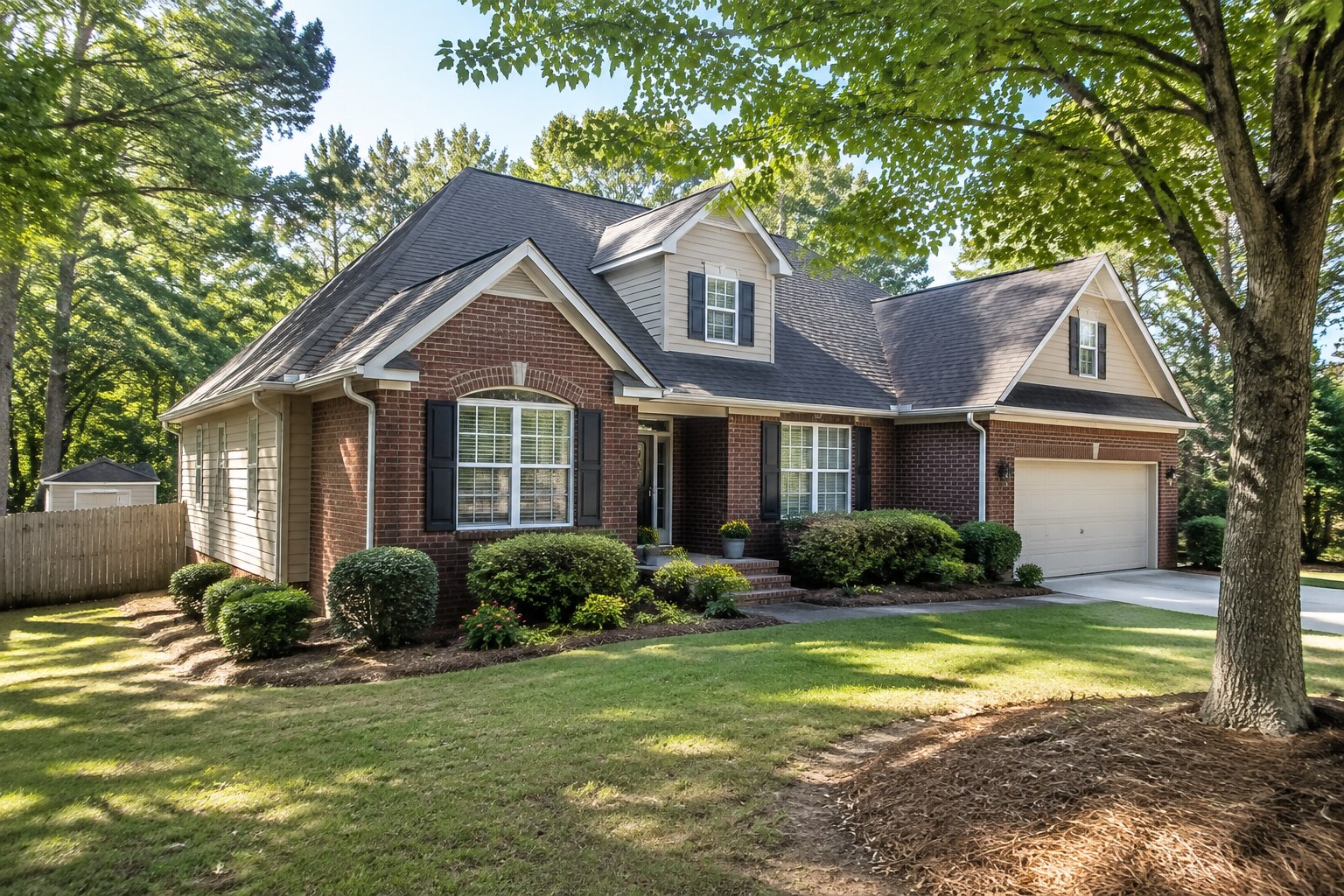
A resale home may already have:
These improvements cost money. They should be listed clearly in the marketing so buyers do not treat them as background details.
Completed new construction inventory does not include every builder floor plan in every community. A buyer who needs to move soon must choose from what is actually available.
Resale homes give buyers access to a broader mix of layouts, architectural styles, neighborhoods, and lot sizes. An older home may also offer a floor plan or finish level that is no longer being built at the same price.
Older neighborhoods often have larger lots and established trees or landscaping. Some buyers also prefer an area where most construction is complete rather than living near active building work.
With an older resale home, buyers and inspectors can evaluate how the house and site have performed over time. Settlement, drainage concerns, maintenance patterns, and the condition of major systems may be easier to observe than they are in a newly completed property.
That does not mean an older home is automatically free of problems. It means there is a longer history available for evaluation.
Builders sometimes adjust materials or finish levels to control construction costs. In certain neighborhoods, an older resale home may have finishes or included features that are more substantial than those in the builder's current base package.
If that is true for your home, the marketing needs to show it clearly and accurately.
A newer resale home near active construction may face the toughest comparison. If the location, neighborhood, size, and price are similar, buyers may ask why they should purchase a previously occupied home instead of a brand new one.
The resale home generally needs to do one of two things:
For a newer resale home, sellers should pay close attention to:
Buyers comparing the property with new construction are less likely to overlook visible wear simply because the home is only a few years old.
The strategy should change as the home ages.
Heating and air conditioning equipment, water heaters, roofing components, and appliances may be approaching a point where buyers begin thinking about replacement costs. Depending on the system and its condition, a seller may want to have it evaluated, serviced, repaired, or replaced.
A home warranty paid for by the seller may provide some reassurance, but it is not a substitute for needed maintenance or a guarantee that every future failure will be covered.
If major updates have not been completed, the price should reflect the age and condition of the systems and finishes. Outdated fixtures, worn flooring, strong colors, old appliances, or deferred maintenance may require a price adjustment.
Sometimes fresh paint and new carpet or flooring can make a significant difference. A seller should not automatically renovate the kitchen or bathroom simply to compete with new construction. The work should be selected based on the likely buyer response, cost, neighborhood values, and seller's goals.
Sellers become accustomed to the smell of their own homes. Buyers do not.
Pet, cigarette smoke, cooking, moisture, and other odors can make buyers question the home's cleanliness or condition. Plug in fragrances usually do not solve the problem. They may make the smell stronger, bother buyers with sensitivities, or cause buyers to wonder what is being covered up.
The source of the odor should be identified and corrected when possible. That may require deep cleaning, air filter replacement, flooring removal, paint, duct cleaning, or professional treatment depending on the cause.
Buyers usually decide which homes to tour after looking online. Professional photography is not optional when the competition includes professionally marketed model homes.
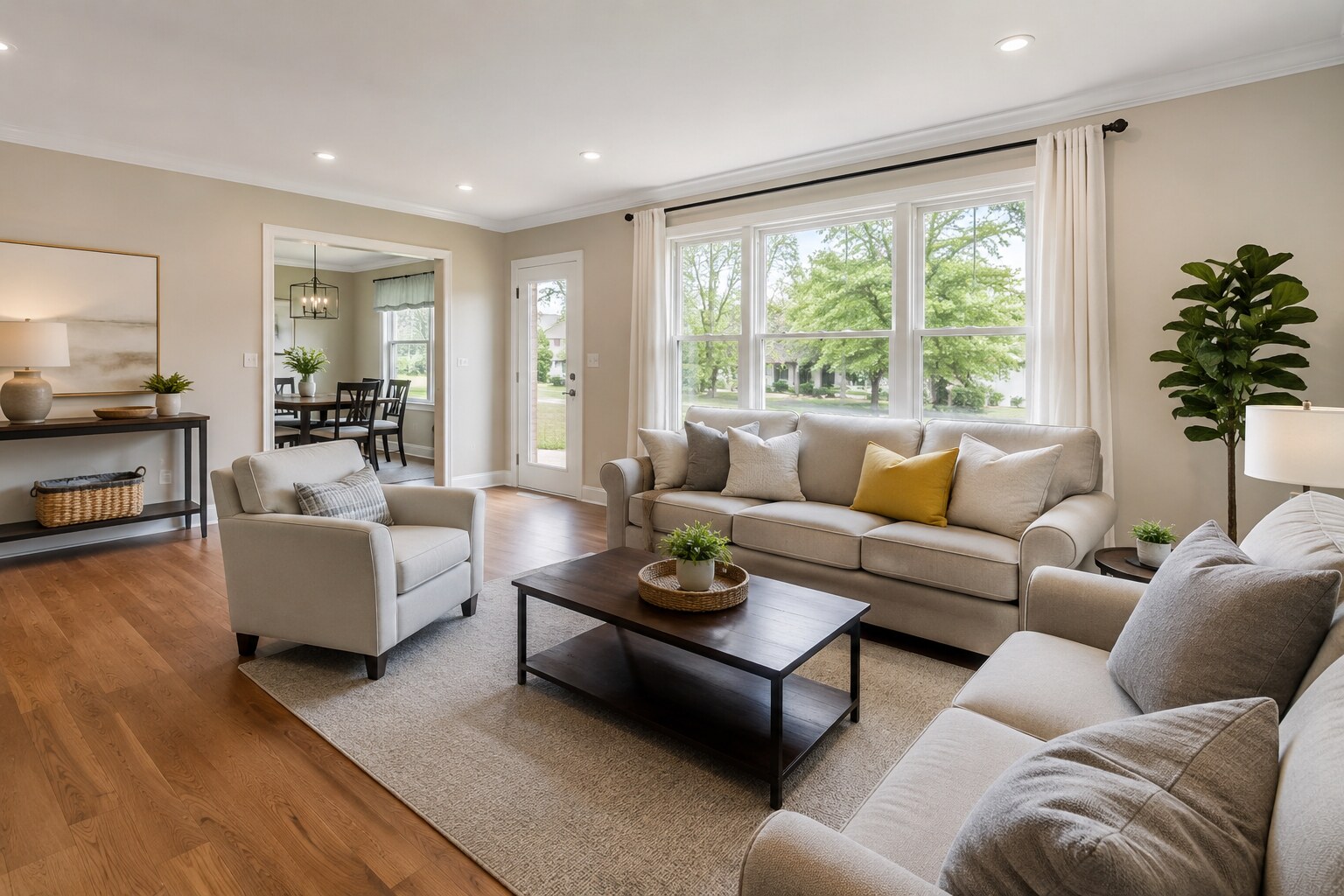
Good photography uses appropriate lighting and angles to show the property's layout and features accurately. It should encourage the buyer to schedule a visit without creating unrealistic expectations.
Preparation matters just as much as the camera:
The age or style of the seller's furniture is usually less important than whether the home feels clean, maintained, and easy to move through.
I worked with a seller whose home was in good condition and nicely staged. The paint colors were coordinated and reflected the seller's taste, but the palette was bold throughout the interior. The exterior also included a strong accent color.
Buyers were comparing the home with nearby new construction featuring light, neutral finishes. The resale home's price was reduced, but the reductions did not solve the problem.
The seller eventually hired someone to tone down the exterior accent color and spent about a week repainting most of the interior in one consistent neutral color. The home sold shortly after the work was completed.
The original colors were not poorly chosen. They simply made it harder for many buyers to picture their furniture and belongings in the home. The lesson was not that every seller must paint everything neutral. The lesson was that a presentation problem cannot always be fixed with a lower price.

There is no single answer that works for every property.
I review the active new construction and resale competition with the seller. We also look at homes that recently went under contract and compare what those properties offered that buyers may have selected over the seller's home.
Then we consider the available choices:
A seller contribution may be used toward approved buyer closing costs or an interest rate buydown, subject to the contract, loan program, appraisal, and lender approval. I generally prefer not to advertise a contribution for only one narrow use when flexibility could help a wider range of buyers.
A price reduction by itself may not provide the monthly payment or upfront cash relief a buyer needs. It can also reduce the seller's net before the buyer requests additional concessions. In some market conditions, a smaller price adjustment combined with a flexible contribution may be more effective.
That decision should be based on the actual competition and the seller's financial limits, not a guess.
A seller cannot assume that any buyer can use any amount of offered money. The permitted amount and use depend on the buyer's loan type, occupancy, down payment, appraised value, and lender requirements.
For example, Fannie Mae's limits for financing concessions on many conventional principal residence transactions vary with the ratio between the loan amount and the property value. FHA guidance generally permits interested parties to contribute up to 6 percent of the sales price toward eligible borrower costs. VA rules distinguish between ordinary closing cost payments and certain seller concessions, and temporary buydowns are subject to specific requirements.
The buyer's lender must confirm what is allowed. An unused concession generally cannot simply be handed to the buyer as cash at closing. If the amount exceeds eligible costs or program limits, the contract may need to be amended or the unused portion may remain with the seller, depending on the agreement and lender instructions.
Sellers can review the current program guidance from Fannie Mae, FHA, and VA, but the professionals handling the specific loan and closing should determine what applies.
Closed sales matter, but buyers choose among the homes available today. That includes new construction.
The final buyer comparison may include the interest rate, closing cost credit, upgrades, lot premium, included features, and estimated future expenses.
Buyers may require a substantial discount for repairs, or they may skip the home entirely because they want a property they can occupy without immediate work.
An improvement can make a home more appealing without adding an equal amount to the market value. Buyers determine value based on their preferences and alternatives.
When builders and competing sellers are helping buyers with closing costs or rate relief, refusing to discuss concessions can shrink the resale home's buyer pool.
The first days on the market matter. If buyers consistently choose competing homes, the seller should review the price, condition, presentation, and incentives before the listing loses more momentum.
The hardest truth may be that a resale home cannot compete at the price the seller needs.
Before listing, sellers should answer these questions:
Putting together a Plan B is not pessimistic. It prevents rushed decisions later and helps everyone begin with realistic expectations.
Before an Augusta area resale home is listed, I recommend evaluating five parts of the offer buyers will see:
Your resale home does not need to become new construction. It needs a clear, defensible position in the market.

Yes, a negotiated seller contribution may sometimes be used for a temporary or permanent rate buydown. The buyer's loan program, lender, appraisal, available closing costs, and contract determine what is permitted.
Not always. A closing cost contribution may reduce the buyer's cash needed at closing, while a price reduction may provide only a modest monthly payment change. The best choice depends on the buyer, financing, competition, and seller's estimated net.
Usually, broader language gives buyers and their lenders more flexibility. The contract should state the final amount and permitted purpose clearly. Any advertised offer should also state that it depends on an acceptable offer and applicable financing limits.
Usually not. Major renovations completed only for resale may not return their full cost. Address safety concerns, needed repairs, deferred maintenance, odors, cleanliness, and the most distracting cosmetic issues first. Price should reflect the remaining age and condition.
It may reduce some concern, but it does not replace maintenance, guarantee coverage, or eliminate the buyer's expected future expense. The system's condition, age, service history, and price of the home still matter.
Reviewing active competition can help a seller understand the condition, finish level, floor plans, pricing, and advertised incentives buyers are seeing. Any visit should be used for market research, not to copy upgrades that may not be financially worthwhile.
Review the resale home's position again. The best response may involve price, concessions, condition, marketing, or a combination. A builder change does not automatically require matching it dollar for dollar, but it should not be ignored.
That may mean adjusting expectations, reconsidering the timing, exploring whether renting is practical, or deciding not to sell. A seller should calculate the likely net proceeds and carrying costs before choosing a path.
If you are preparing to sell a home in Augusta Richmond County, Columbia County, North Augusta, or a surrounding community, I can help you compare your property with both resale and new construction competition.
We will review the home's likely buyer, condition, active competition, builder incentives, pricing options, possible seller contributions, and your financial limits. The goal is to create a strategy that supports your needs while staying grounded in what buyers are choosing.
Visit YourAugustaHome.com/Sell or call or text Anne Turner at 706-250-1517 to request a confidential resale versus new construction market review.
Anne Turner is an Associate Broker and REALTOR® licensed in Georgia and South Carolina. She serves home sellers and buyers in Augusta Richmond County, Columbia County, North Augusta, and surrounding communities.
This article provides general real estate information and is not legal, lending, insurance, inspection, contracting, or tax advice. Property requirements and disclosure obligations depend on the home, contract, financing, state law, and the professionals involved.
Market information changes frequently and varies by property. This article is for general informational purposes and is not a guarantee of price, timing, proceeds, or sale.
#YourAugustaHome #ATurnerSellsHomes #AugustaGA #FtGordon

As a top-rated full-time REALTOR® and Associate Broker licensed in both Georgia and South Carolina for over 12 years, I’m committed to delivering exceptional service and support to every cli....
Augusta GA Real Estate Market Update: Where Are Buyers Making Moves?If you are thinking about buying or selling a home in the Augusta area, one of the most useful questions to ask is not simply
How to Coordinate Selling Your Current Home and Buying in AugustaSelling one home while purchasing another can feel like solving a puzzle.The sale price of your current home may affect your down
How Can My Augusta Area Resale Home Compete With New Construction Incentives?If you are preparing to sell a resale home in Augusta Richmond County, Columbia County, or North Augusta, you may be
Augusta GA Real Estate Market Update: Homes That Sell Versus Homes That SitThe Augusta real estate market is showing two very different stories right now: homes that sell and homes that sit.Buyers
 Aiken Board of Realtors® All information deemed reliable but not guaranteed. All properties are subject to prior sale, change or withdrawal. Neither listing broker(s) or information provider(s) shall be responsible for any typographical errors, misinformation, misprints and shall be held totally harmless. Listing(s) information is provided for consumer's personal, non-commercial use and may not be used for any purpose other than to identify prospective properties consumers may be interested in
purchasing. The data relating to real estate for sale on this website comes in part from the Internet Data Exchange program of the Multiple Listing Service. Real estate listings held by brokerage firms other than Weichert, Realtors® - Cornerstone - Martinez may be marked with the Internet Data Exchange logo and detailed information about those properties will include the name of the listing broker(s) when required by the MLS. Copyright ©2026 All rights reserved.
Last Updated: September 21, 2026 10:39 PM UTC
Show More...
Aiken Board of Realtors® All information deemed reliable but not guaranteed. All properties are subject to prior sale, change or withdrawal. Neither listing broker(s) or information provider(s) shall be responsible for any typographical errors, misinformation, misprints and shall be held totally harmless. Listing(s) information is provided for consumer's personal, non-commercial use and may not be used for any purpose other than to identify prospective properties consumers may be interested in
purchasing. The data relating to real estate for sale on this website comes in part from the Internet Data Exchange program of the Multiple Listing Service. Real estate listings held by brokerage firms other than Weichert, Realtors® - Cornerstone - Martinez may be marked with the Internet Data Exchange logo and detailed information about those properties will include the name of the listing broker(s) when required by the MLS. Copyright ©2026 All rights reserved.
Last Updated: September 21, 2026 10:39 PM UTC
Show More...
 The data relating to real estate on this web site comes in part from the Internet Data Exchange program of Hive MLS LLC, and is updated as of September 21, 2026 10:09 PM UTC All information is deemed reliable but not guaranteed and should be independently verified. All properties are subject to prior sale, change, or withdrawal. Neither listing broker(s) nor Weichert, Realtors® - Cornerstone - Martinez shall be responsible for any typographical errors, misinformation, or misprints, and shall be
held totally harmless from any damages arising from reliance upon these data. © 2026 Hive MLS LLC
Show More...
The data relating to real estate on this web site comes in part from the Internet Data Exchange program of Hive MLS LLC, and is updated as of September 21, 2026 10:09 PM UTC All information is deemed reliable but not guaranteed and should be independently verified. All properties are subject to prior sale, change, or withdrawal. Neither listing broker(s) nor Weichert, Realtors® - Cornerstone - Martinez shall be responsible for any typographical errors, misinformation, or misprints, and shall be
held totally harmless from any damages arising from reliance upon these data. © 2026 Hive MLS LLC
Show More...
